
In this guide
If you have a sidewalk violation copy in front of you but are not sure what it means, do not guess.
The best first step is to send it to us or contact us with the property details. We can help you tell whether the document points to a small repair, a wider scope issue, or a problem that needs fast scheduling.
Why owners should ask us to review the copy first
Many owners read the paper but miss the practical meaning.
The document can look simple while still leaving important questions unanswered:
- Which flags are actually being cited?
- Is the deadline already running?
- Does the site condition match the marked sections?
- Is the job likely straightforward or more involved?
That is why we recommend starting with our contact page, then using city resources as backup verification.
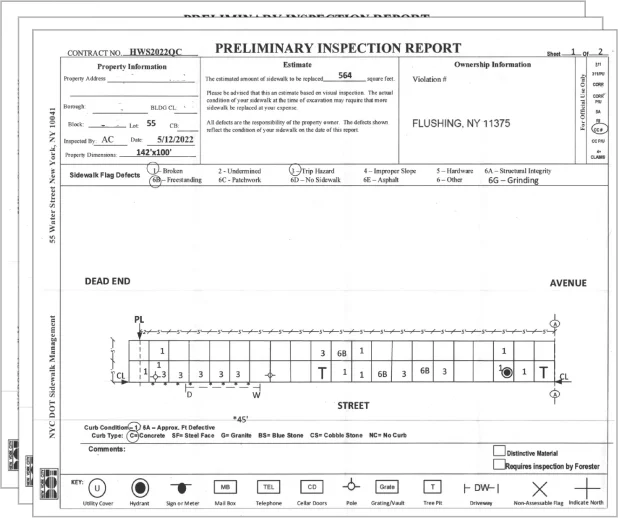
The key parts of the violation copy
The official NYC Sidewalks property owner guide is one of the best city references for understanding the Preliminary Inspection Report and the marked sidewalk flags.
When you read the copy, focus on:
- property address
- violation number
- date of issue
- map or sketch of the sidewalk area
- numbered flags or marked defect locations
How to read the defect map correctly
The numbered areas on the report usually matter more than the owner's general impression of the sidewalk.
In simple terms, the map tells you which sidewalk sections were identified as defective. Those are the sections that need special attention when estimating the repair.
The official DOT sidewalk repair checklist is also helpful because it shows the core property and violation details that matter during dismissal and paperwork review.
What owners get wrong most often
Common mistakes include:
- focusing only on the most visible crack
- ignoring other numbered flags on the copy
- assuming the work is done because one area was patched
- not matching the document to the actual property frontage
If that happens, owners can end up with incomplete repair work and more delay later.
What to do after you finish reading the copy
Once you understand the main fields, your next step is usually one of these:
- request a repair estimate
- request clarification or a better copy
- confirm case status
- plan the repair and closeout process
If you do not yet have the document, read our guide on requesting a copy of the sidewalk violation.
Quick FAQ
Is the violation copy the same as a repair estimate?
No. The copy tells you what the city identified. The estimate tells you what the repair is likely to cost and how the work will be handled.
Do the numbered flags matter?
Yes. They are often the most important part of understanding the required scope.
What if I still do not understand the form?
Contact us. We can review the copy with you and explain the practical next step.
Final takeaway
Reading the violation copy correctly can save you from repairing the wrong area or waiting too long to act. Start with us first if you want the fastest practical answer, then use the city documents as confirmation.